
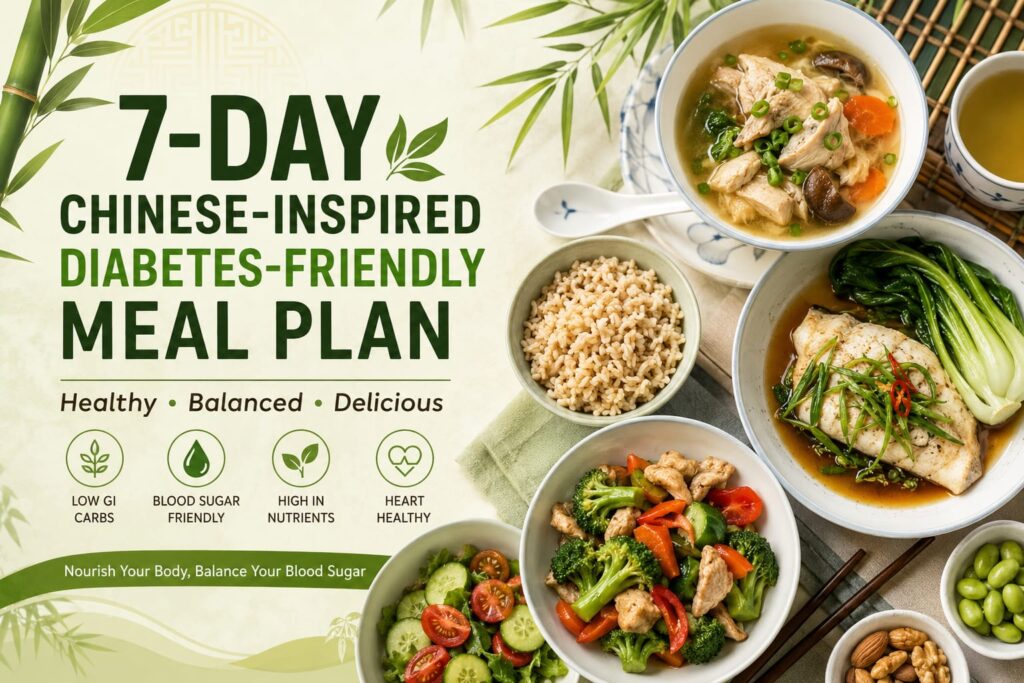
7-Day Chinese-Inspired Diabetes-Friendly Meal Plan
A well-planned diet can make it easier to manage blood sugar while still allowing you to enjoy flavorful and satisfying meals. This 7-day Chinese-inspired meal plan focuses on vegetables, lean proteins, whole grains, healthy fats, and sensible portions of carbohydrate-rich foods.
The plan is designed as a general educational guide, not as an individualized diabetes diet. Your ideal carbohydrate and calorie intake may be different depending on your age, activity level, medications, health goals, and blood glucose targets.
Day 1
Breakfast
- Vegetable and egg rice bowl
- 1 small serving of cooked brown rice
- 1 boiled egg
- Bok choy, mushrooms, and green onions
- Unsweetened green tea
Lunch
- Steamed chicken and vegetable bowl
- A moderate portion of brown or whole-grain rice
- Steamed broccoli, carrots, and cabbage
- Light homemade ginger-garlic dressing
Dinner
- Ginger-steamed fish
- Stir-fried leafy greens
- Small serving of brown rice
- Cucumber and tomato salad
Snack
Choose one:
- A small apple with a few unsalted nuts
- Plain unsweetened yogurt
- A small serving of edamame
Day 2
Breakfast
- Vegetable omelet with mushrooms and green onions
- One slice of whole-grain toast
- A small portion of fresh berries
Lunch
- Chicken and vegetable soup
- Tofu and mixed vegetables
- Small serving of whole-grain noodles
Dinner
- Lean beef with broccoli and bell peppers
- Small serving of brown rice
- Steamed cabbage or bok choy
Snack
- Unsweetened soy milk
- Small handful of unsalted almonds
Day 3
Breakfast
- Oatmeal prepared with unsweetened soy milk
- Walnuts or almonds
- Cinnamon
- A small portion of berries
Lunch
- Steamed vegetable and tofu bowl
- Small portion of brown rice
- Cucumber and leafy-green salad
Dinner
- Light tofu and minced chicken stir-fry
- Mushrooms and bok choy
- Small serving of whole-grain rice
Snack
- Plain Greek-style yogurt with a small amount of fruit
Day 4
Breakfast
- Two eggs with tomato, cucumber, and leafy greens
- One slice of whole-grain toast
- Unsweetened tea or coffee
Lunch
- Chicken and vegetable whole-grain noodles
- Broccoli, cabbage, carrots, and mushrooms
- Use a small amount of low-sodium sauce
Dinner
- Steamed white fish with ginger and scallions
- Stir-fried green vegetables
- Moderate portion of brown rice
Snack
- Edamame or a small piece of fruit with nuts
Day 5
Breakfast
- Egg and vegetable pancake made with a modest amount of whole-grain flour
- Cucumber and lettuce
- Unsweetened soy beverage
Lunch
- Chicken and vegetable soup with whole-grain noodles
- Mixed vegetables such as cabbage, mushrooms, and spinach
Dinner
- Lean pork with steamed cabbage and squash
- Small serving of brown rice
- Fresh vegetable salad
Snack
- Plain yogurt with a small serving of berries
Day 6
Breakfast
- Millet and vegetable porridge
- One boiled egg
- A small portion of peanuts or walnuts
- Steamed leafy vegetables
Lunch
- Beef and broccoli stir-fry
- Small serving of whole-grain noodles
- Cucumber salad
Dinner
- Braised chicken with eggplant and mushrooms
- Small portion of brown rice
- Steamed green vegetables
Snack
- Unsweetened soy milk and a few unsalted nuts
Day 7
Breakfast
- Chicken and vegetable congee
- Add oats, barley, or beans to part of the grain mixture for additional fibre
- One boiled egg
Lunch
- Tomato and egg stir-fry
- Moderate serving of whole-grain noodles
- Garlic-sautéed leafy greens
Dinner
- Lean pork and vegetable soup
- Small serving of brown rice
- Stir-fried green beans with mushrooms
Snack
- One small whole fruit
- A small handful of unsalted nuts
Healthy Snack Ideas
If you need a snack between meals, choose foods that provide a combination of fibre, protein, or healthy fats rather than relying mainly on sugary foods.
Good options include:
- A small whole fruit with unsalted nuts
- Plain, unsweetened yogurt
- Unsweetened soy milk
- Edamame
- A boiled egg with cucumber
- A small slice of whole-grain toast with natural nut butter
- A small portion of nuts and seeds
Remember that snacks are not automatically necessary for everyone with diabetes. Your medication schedule, activity level, hunger, and blood glucose pattern should guide whether you need them.
5 Smart Cooking Tips for Blood Sugar Management
- Keep sauces under control
Many Chinese-style sauces can contain significant amounts of sodium or added sugar. Use smaller quantities and choose reduced-sodium products when available.
- Fill more of your plate with vegetables
Broccoli, bok choy, cabbage, mushrooms, spinach, cucumber, green beans, and other non-starchy vegetables can help make meals more filling without relying heavily on refined carbohydrates.
- Choose higher-fibre carbohydrates
When possible, choose brown rice, barley, oats, millet, beans, or whole-grain noodles instead of large portions of refined grains.
- Use healthy fats in moderation
Small amounts of olive or canola oil, nuts, seeds, and avocado can provide unsaturated fats. However, healthy fats are still calorie-dense, so portion size matters.
- Prefer steaming, boiling, baking, and light stir-frying
These cooking methods can help reduce the amount of added oil compared with deep-frying while preserving the flavor of vegetables, fish, chicken, tofu, and other ingredients.
How to Build a Diabetes-Friendly Chinese Meal
A simple approach is to build your plate around three components:
Vegetables: Make vegetables a major part of the meal.
Protein: Choose fish, chicken, tofu, eggs, or lean meat.
Carbohydrates: Keep rice, noodles, grains, or other starchy foods to a sensible portion and favor higher-fibre options when possible.
You can also add a small amount of healthy fat, such as nuts, seeds, avocado, or cooking oil.
Important Note About Carbohydrates
There is no single carbohydrate target that is appropriate for every person with diabetes. Some people may need a specific carbohydrate distribution because of their medication or insulin regimen, while others may follow a different approach.
For that reason, portion sizes in this meal plan should be adjusted according to your individual nutritional requirements and blood glucose response.
If you take insulin or medicines that can cause low blood sugar, do not make major dietary changes without discussing them with your healthcare professional.
Final Thoughts
A diabetes-friendly eating pattern does not require giving up flavorful foods. Chinese-inspired meals can fit into a balanced diet when you focus on vegetables, lean protein, higher-fibre carbohydrates, moderate portions, and limited added sugar and sodium.
Use this 7-day plan as a starting point rather than a rigid prescription. Your individual nutritional needs should determine the appropriate portions and carbohydrate intake.
Medical Disclaimer: This article is provided for general educational purposes and is not a substitute for medical advice, diagnosis, or treatment. People with diabetes should consult a qualified healthcare professional or registered dietitian before making significant changes to their diet, especially when using insulin or glucose-lowering medication.