
Proteinmaxxing for Real Weight Loss: Keep Your Muscle While Shedding Fat
Most people chasing weight loss make the same quiet mistake.
They eat less. Sometimes a lot less. The scale goes down, they feel happy for a few weeks… and then they look in the mirror and realize something’s off. Their clothes fit better, but they look softer. Weaker. Less toned.
That’s what happens when you lose weight without protecting your muscle.
In 2026, more people are talking about proteinmaxxing — not as some gym-bro obsession, but as a smart way to lose fat while actually keeping the muscle you’ve worked for (or want to keep).
What is proteinmaxxing, really?
It’s simply making protein a bigger priority in your daily meals. Not extreme amounts. Just consistently higher than what most people normally eat.
When you do this while in a calorie deficit, a few important things happen:
- You stay fuller for longer, so the deficit feels less painful
- Your body is less likely to break down muscle for energy
- You maintain a better metabolism
- You look leaner and more defined as the fat comes off
In short: you lose more fat and less muscle.
How much protein do you actually need?
A lot of general advice still says 0.8 grams per kilogram of body weight. That’s the bare minimum for survival, not for someone trying to lose fat while looking good.
If your goal is fat loss with muscle retention, most people do better with 1.6 to 2.2 grams of protein per kilogram of their target body weight.
Example:
If you weigh 80 kg and want to get down to around 70–72 kg, aiming for 130–150 grams of protein per day is a solid range for most people.
You don’t need to hit it perfectly every single day. Getting close most days already makes a big difference.
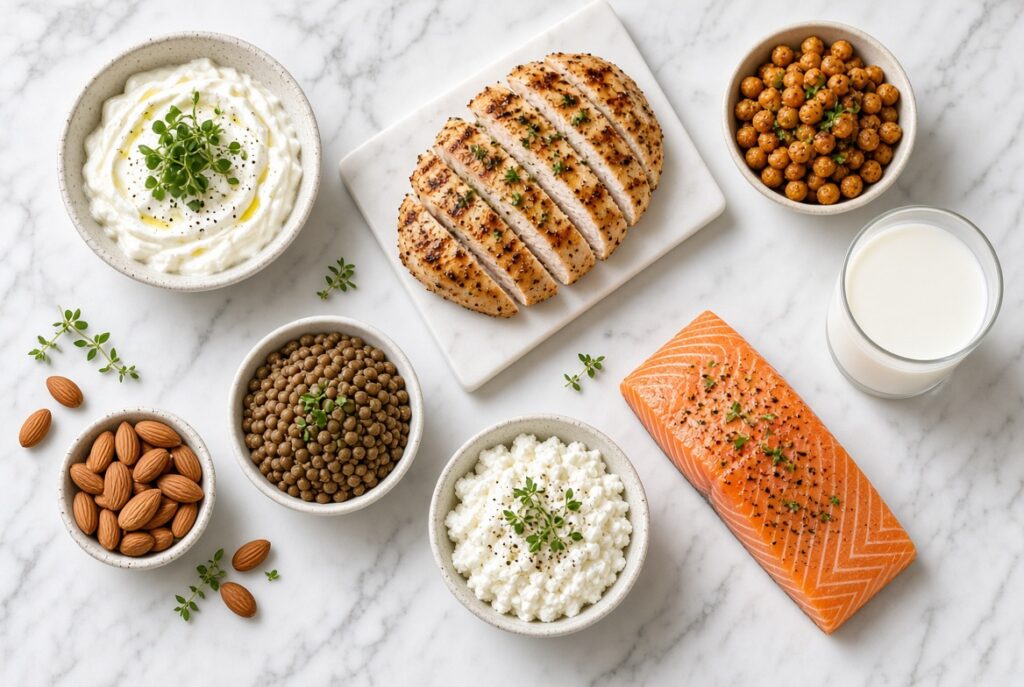
Easy ways to proteinmax without living on chicken breast
Breakfast ideas
- Eggs (3–4) with some Greek yogurt on the side
- Protein oats (mix whey or plant protein into your regular oats)
- Cottage cheese or paneer with fruit
Lunch & Dinner
- Dal + paneer or chicken
- Grilled fish or eggs with lots of vegetables
- Greek yogurt or high-protein curd as a side
- Lentils, chickpeas, and beans (great if you’re vegetarian)
Snacks that actually help
- A scoop of protein powder in water or milk
- Roasted chana or makhana
- Greek yogurt
- A handful of nuts + some cheese
You don’t have to overhaul your entire diet overnight. Just start by adding one solid protein source to every meal. That alone moves the needle.
The biggest mistake people make
They go hard on protein for a few days, then drop back to normal. Consistency beats perfection here. Even if some days you only hit 100–110 grams, that’s still better than the 50–60 grams most people casually eat.
Also, pair it with strength training if you can. Protein protects muscle better when you’re giving your body a reason to keep it (lifting weights or bodyweight exercises).
How this works with TrueGlobalCare tools
Use the calorie calculator on the site to find a moderate deficit first. Then build your meals around protein. When hunger hits (and it will), a high-protein meal usually handles it better than low-protein, high-carb options.
A lot of people who struggle with constant hunger during weight loss are simply not eating enough protein. Once they fix that, the whole process becomes more manageable.
Final thought
Losing weight is relatively easy. Losing fat while keeping (or even building) muscle is the real skill.
Proteinmaxxing isn’t flashy. It won’t give you overnight results. But it’s one of the most reliable habits you can build if you want the kind of weight loss that actually looks good and lasts.
Start by adding a bit more protein to your next meal. Keep doing it for two weeks and pay attention to how your hunger, energy, and body feel.
That’s usually when people get it.