
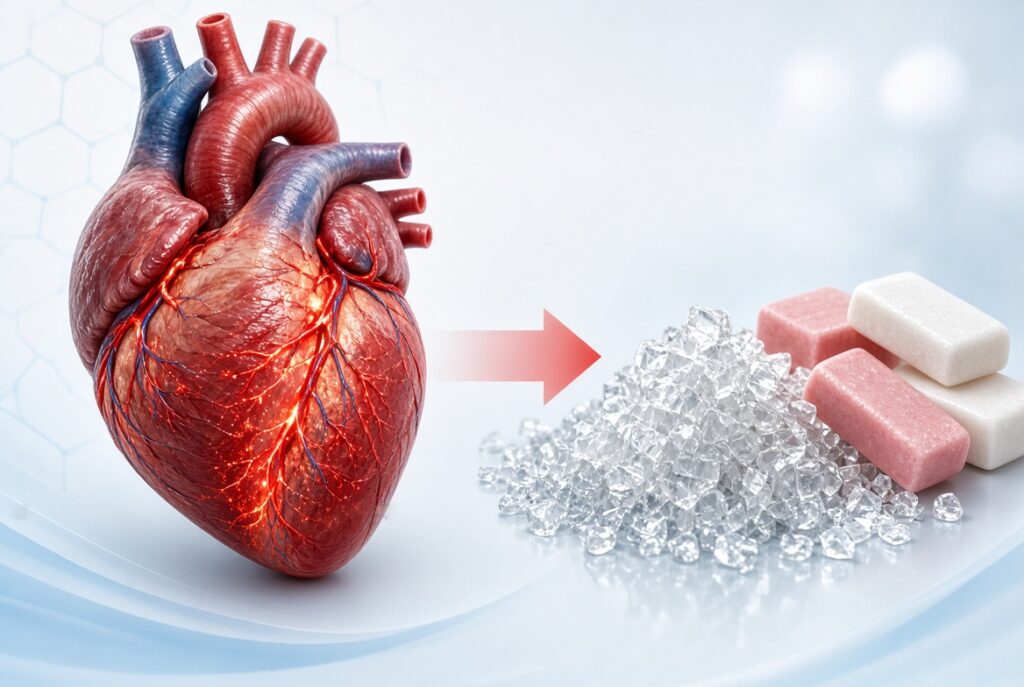
Xylitol and Heart Risk: What You Should Know
Most of us have reached for sugar-free gum or candy thinking we’re making a healthier choice. Xylitol, a popular sugar substitute, has been marketed for years as a better option — lower in calories, better for teeth, and friendly for people watching their blood sugar.
But recent research is making experts pause. Studies now suggest that higher levels of xylitol in the blood may be linked to an increased risk of heart attack and stroke. Here’s a clear look at what the science is saying.
What Exactly Is Xylitol?
Xylitol is a sugar alcohol (also called a polyol). It’s found naturally in small amounts in some fruits and vegetables, and your body even produces a little of it. Food manufacturers use much larger amounts of it to sweeten sugar-free gum, candies, chocolates, baked goods, and some low-carb products.
For a long time, it was considered one of the safer alternatives to regular sugar. That view is now being questioned.
What the Research Found About Xylitol Cardiovascular Risk
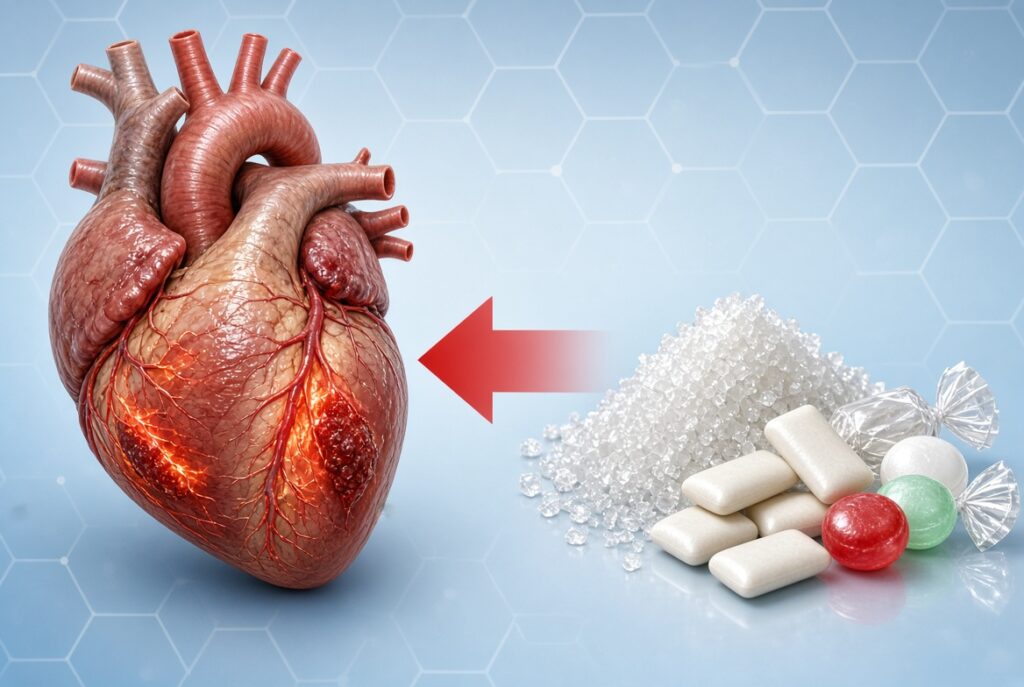
In 2024, researchers from the Cleveland Clinic published an important study in the European Heart Journal. They found that people with the highest levels of xylitol in their blood had a significantly higher chance of experiencing major heart-related events — including heart attack, stroke, or death from cardiovascular causes — over the following three years.
The difference was notable: those in the top third of xylitol levels had about a 57% higher risk compared to people with the lowest levels.
Later data from larger long-term studies (shared in 2026) continued to support this connection. The pattern appeared dose-dependent — the higher the xylitol levels in the blood, the greater the risk.
Why Might Xylitol Affect the Heart?
The main issue seems to be blood clotting.
Researchers discovered that xylitol can make blood platelets more reactive. In simple terms, it makes the platelets “stickier” and more likely to clump together. When this happens too easily, it raises the risk of unwanted blood clots.
- A clot in a heart artery can trigger a heart attack.
- A clot that reaches the brain can cause a stroke.
In one part of the study, healthy volunteers drank a beverage containing a typical amount of xylitol. Within 30 minutes, their blood xylitol levels shot up dramatically (as much as 1,000 times higher), and several measures of platelet activity increased. This effect did not happen with regular sugar.
Interestingly, the same research team previously found similar results with another sugar alcohol called erythritol.
Should You Stop Using Xylitol Completely?
Not necessarily — the amount matters.
Small amounts, like those in toothpaste or a single piece of sugar-free gum, are unlikely to cause serious concern because very little gets absorbed into the bloodstream. The bigger question is about regular, higher intake — for example, frequently eating sugar-free candies, desserts, or drinks that list xylitol as a main sweetener.
People who already have heart disease, a history of blood clots, diabetes, or other cardiovascular risk factors may want to be more careful.
Practical Takeaways
If you currently use a lot of xylitol-sweetened products, here are some sensible steps:
- Start reading labels more carefully.
- Cut back on products where xylitol is one of the main ingredients.
- Choose whole fruits when you want something sweet.
- Talk to your doctor if you have existing heart concerns.
Final Thoughts
The current evidence suggests that elevated xylitol levels in the blood are associated with higher cardiovascular risk, mainly through increased blood clotting. While more long-term research is still needed, the findings are strong enough that many health experts now recommend moderation.
Making informed choices about what we put in our bodies is always worthwhile — especially when it comes to heart health.
Meta Description
Recent studies indicate that higher blood xylitol levels may be linked to increased cardiovascular risk, potentially through heightened blood clotting. This article explains the findings, what they mean for daily use of xylitol, and practical guidance for readers concerned about heart health.