
Salmonella Infection: Everything You Need to Know About This Common Foodborne Illness
Smart AI Health Calculator
This AI-powered tool provides a precise Body Mass Index (BMI) calculation along with daily calorie analysis. Enter your age, height, weight, and activity level to receive clear health insights through a modern, user-friendly interface.
Link:
[ https://trueglobalcare.com/ ]
Here’s the thing: millions of people get Salmonella infections every single year. It’s one of the most common foodborne illnesses out there. But don’t worry—most of us bounce back within a few days without any lasting damage. The tricky part? For young kids, older adults, and anyone with a compromised immune system, it can get pretty serious.
In this guide, we’re walking you through everything about Salmonella infection: what it actually is, how you catch it, what symptoms to watch for, who’s most vulnerable, how doctors diagnose it, what your treatment options are, and—most importantly—how to keep yourself safe. We’ve pulled information from trusted sources like the CDC, Mayo Clinic, and FDA so you can feel confident about what you’re reading.
What Exactly is Salmonella?
Let’s start with the basics. Salmonella is a group of bacteria that naturally lives in the guts of humans, animals, and birds. Normally, they just hang out there without causing problems. But when these bacteria sneak into your body through contaminated food or water? That’s when things get uncomfortable—and that’s when you get salmonellosis.
Here’s a wild fact: there are over 2,500 different types of Salmonella bacteria, but thankfully, only a handful actually cause infections in people. The two main troublemakers are Salmonella Enteritidis and Salmonella Typhimurium.
Calorie Calculator
Understanding your calorie needs is key for weight management. This tool calculates your daily calorie requirements and helps you plan for weight loss, maintenance, or muscle gain. It offers quick, useful insights for better nutrition decisions.
Link:
[https://trueglobalcare.com/calorie-calculator/ ]
How Do You Actually Get Salmonella?
The short answer? The bacteria in someone’s poop ends up in your food or water, and boom—you’re infected. Sounds gross, right? That’s because it kind of is.
Here are the most common ways people catch Salmonella:
Food choices that put you at risk:
- Eating chicken, beef, or pork that’s undercooked (and yes, that means your eggs need to be cooked all the way through too)
- Drinking raw milk or eating unpasteurized dairy products
- Eating unwashed fruits and veggies that were exposed to contaminated water or animal waste
- Touching raw chicken on your cutting board and then making a salad without cleaning up—classic mistake!
Other sneaky ways you can get infected:
- Playing with your pet reptiles or baby chicks and then eating without washing your hands
- Poor bathroom hygiene (especially important if you’re around kids)
- Contact with someone who has Salmonella if you’re not careful about handwashing
And here’s the kicker: The bacteria can stick around for weeks in dry spots and months in wet ones. Freezing it? Nope, doesn’t work. Drying it out? Also doesn’t kill it. These bacteria are basically tiny survivors.
What Should You Watch For? – Common Salmonella Symptoms
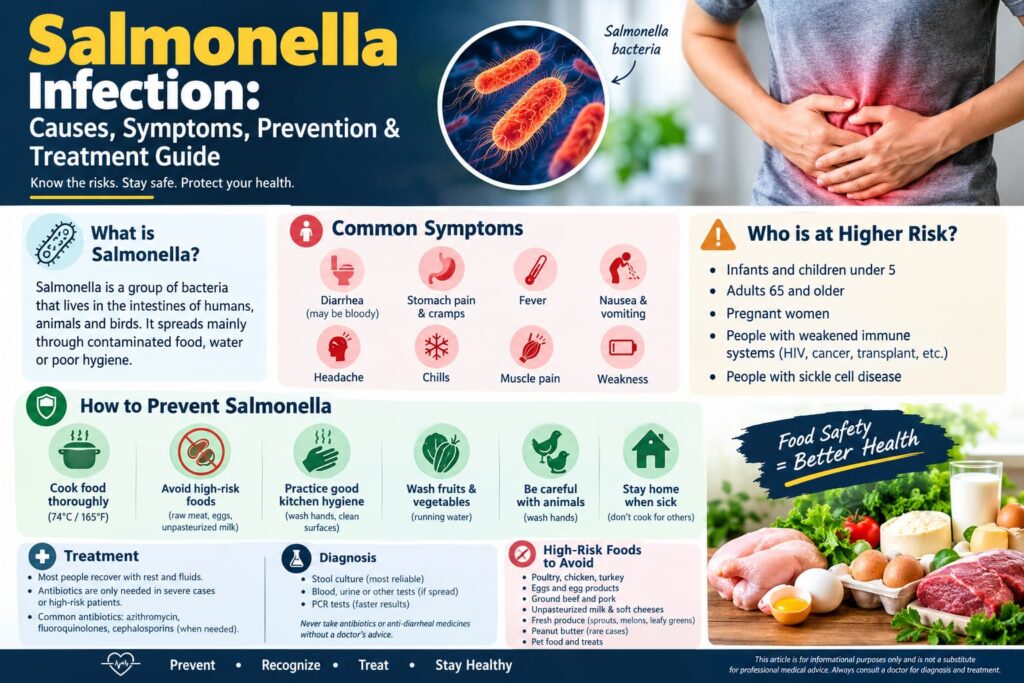
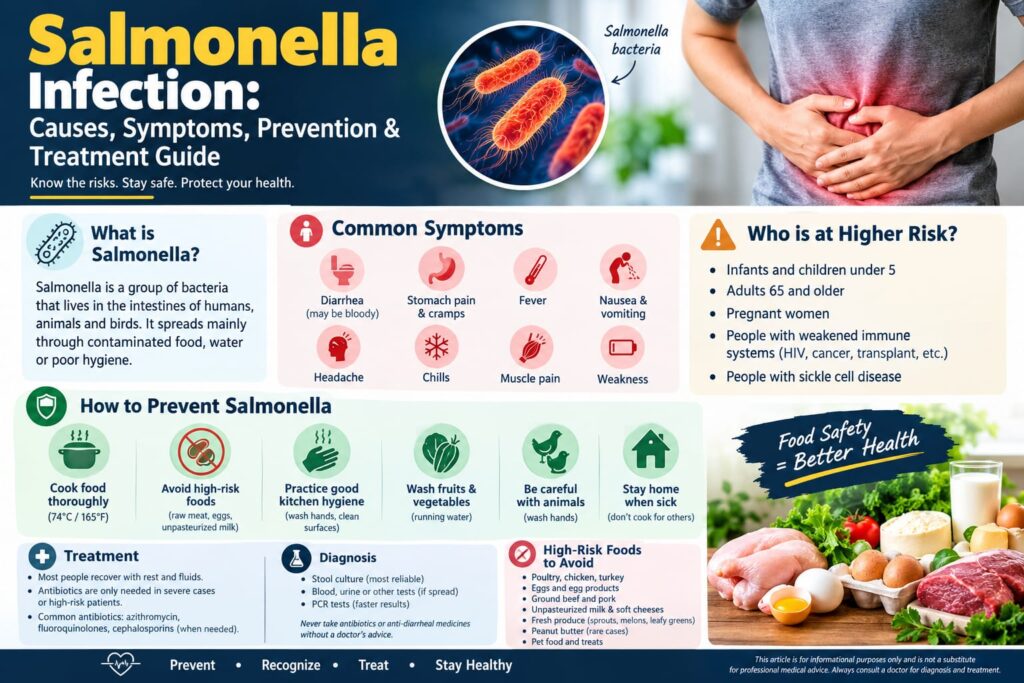
Usually, symptoms pop up somewhere between 6 hours and 6 days after you’ve eaten something contaminated (though most people notice it within 12 to 72 hours).
Here’s what you might experience:
- Sudden diarrhea (sometimes bloody—yeah, that’s fun)
- Stomach cramps and abdominal pain
- Fever
- Nausea and vomiting
- Headache
- Chills
- Muscle aches
The good news? Most people feel much better within 4 to 7 days. Your diarrhea might linger for up to 10 days, and it can take weeks—or even months—for your digestion to completely normalize. In rare cases, the infection can spread to your bloodstream or other organs, which is when things get more complicated.
Who Should Be Extra Worried?
Honestly, anyone can get Salmonella. But some people are at higher risk of serious complications:
- Babies and young children (under 5)
- Older adults (65 and up)
- Pregnant women
- People with weakened immune systems (HIV patients, cancer patients, folks who’ve had organ transplants, etc.)
- People with certain health conditions like sickle cell disease
If you’re in any of these groups and you suspect Salmonella, don’t mess around—get medical help faster. These groups are more likely to end up in the hospital or develop serious complications like severe dehydration or bloodstream infections.
How Do Doctors Figure Out If It’s Salmonella?
Your doctor isn’t going to guess. They’ll run actual tests.
The gold standard? A stool culture. Yep, it’s as fun as it sounds. Sometimes they’ll also test your blood or urine if they think the infection has spread beyond your gut.
Newer testing methods (like PCR panels) can identify the bacteria way faster than older tests. Once they confirm it’s Salmonella, they might do additional testing to see which antibiotics would actually work against your specific strain.
Here’s the thing though: Not every case of diarrhea needs testing. Your doctor will usually recommend it if your symptoms are really severe, they’re not going away after a few days, or if you’re in one of those high-risk groups we talked about.
How to Treat Salmonella Infection
Let’s be real: most people who get Salmonella will get better just by letting their body do its thing. You don’t always need antibiotics, and honestly? Taking them when you don’t need them can sometimes make the bacteria hang around longer.
Standard treatment is pretty straightforward:
- Drink tons of fluids (water is your friend, but electrolyte solutions are even better)
- Get plenty of rest
- Eat gentle, easy-to-digest foods once your appetite comes back
When do you actually need antibiotics?
Your doctor might prescribe antibiotics if you fall into one of these categories:
- You’re really, really sick
- You’ve got a high fever and bloody diarrhea that’s not improving
- The infection has spread beyond your intestines
- You’re a newborn, elderly, or immunocompromised (remember those high-risk groups?)
When antibiotics are needed, doctors typically use azithromycin, fluoroquinolones, or third-generation cephalosporins. Which one works best depends on your specific test results and local resistance patterns.
Whatever you do: Don’t take antibiotics or anti-diarrheal medication without talking to your doctor. Seriously. These can sometimes make Salmonella infection worse, not better.
How to Actually Prevent Getting Salmonella
Okay, this is the part where you can actually take control. Prevention is 100% your best defense.
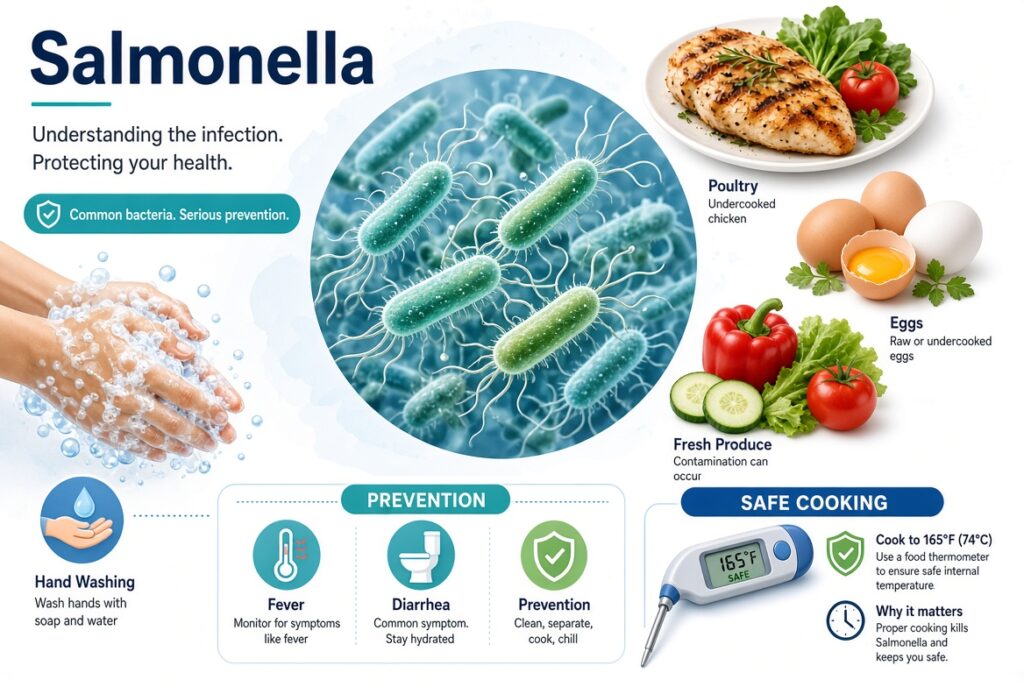
1. Cook Your Food Properly
- Chicken, beef, pork, and leftovers need to reach 74°C (165°F) on the inside
- Eggs? Cook them until the yolk AND the white are completely firm—no runny eggs if you want to be safe
- This is literally the most effective way to kill Salmonella bacteria
2. Skip the Risky Foods
- Raw or undercooked eggs, meat, and poultry
- Unpasteurized milk and dairy products
- Raw cookie dough (yes, really—I know it tastes amazing)
- Homemade mayo made with raw eggs
3. Keep Your Kitchen Clean
- Wash your hands for at least 20 seconds with soap before and after handling food
- Keep raw meat away from ready-to-eat foods
- After touching raw chicken, clean your cutting boards, utensils, and counters with hot soapy water
- Use separate cutting boards for raw meat and vegetables—this is huge for preventing cross-contamination
4. Wash Your Fruits and Veggies
- Even if you’re going to peel them, rinse them under running water first
- This removes a lot of the bacteria that might be hanging out on the surface
5. Be Smart About Pets
- Wash your hands after touching pets, especially reptiles, amphibians, and baby chicks
- These animals are way more likely to carry Salmonella than your dog or cat
6. Stay Home When You’re Sick
- If you have diarrhea or other Salmonella symptoms, don’t prepare food for other people
- You’ll spread it, and nobody wants that
Foods Most Likely to Have Salmonella
If you’ve ever wondered which foods show up most often in Salmonella outbreak reports, here’s your answer:
- Poultry (chicken, turkey, and other birds)
- Eggs and egg products
- Ground beef and pork
- Raw milk and soft cheeses
- Fresh produce like sprouts, melons, and leafy greens
- Peanut butter (rare, but it happens)
- Pet food and treats (yeah, even your dog’s food can have Salmonella)
The bottom line? Cook these foods properly and avoid cross-contamination, and you’ve basically eliminated most of your Salmonella risk.
When Should You Actually See a Doctor?
Not every case of diarrhea needs a doctor’s visit, but some definitely do. Reach out to a healthcare professional if you or your child has:
- Diarrhea that’s lasted more than 3 days
- A fever over 38.9°C (102°F)
- Bloody stools
- Signs of dehydration (dry mouth, barely any urine, feeling dizzy, sunken eyes)
- Vomiting so bad you can’t keep fluids down
- Any Salmonella symptoms if you’re a baby, elderly, or immunocompromised
Getting medical help early can actually prevent serious complications down the line.
Questions People Actually Ask About Salmonella
How contagious is Salmonella?
Here’s something people don’t always realize: you can spread Salmonella to other people for weeks after your symptoms are gone. The bacteria is still in your poop, so good hand hygiene is absolutely crucial. Wash your hands like you’re a surgeon.
Can you catch Salmonella from someone else?
Yes. This is why hand hygiene is so important. If someone doesn’t wash their hands properly after using the bathroom or changing a baby’s diaper, they can pass it to you.
Does freezing kill Salmonella?
Nope. Don’t count on the freezer to save you. This bacteria laughs at low temperatures.
Is there a Salmonella vaccine?
Unfortunately, no vaccine exists for regular foodborne Salmonella. There’s a vaccine for typhoid fever, but that’s a different story.
Can you get Salmonella twice?
Most people recover completely and are fine forever. Some people develop temporary lactose intolerance afterward, or in rare cases, they might get reactive arthritis. But reinfection? That’s pretty unlikely.
What’s the difference between Salmonella and regular food poisoning?
Good question. Salmonella is actually one of the main causes of food poisoning. But food poisoning in general can be caused by lots of things—other bacteria, viruses, toxins. Salmonella is just one of the usual suspects.
Quick Reference: Your Salmonella Prevention Checklist
- ✅ Cook poultry, meat, and eggs to the right temperature
- ✅ Wash hands for 20+ seconds before and after handling food
- ✅ Keep raw meat separate from ready-to-eat foods
- ✅ Clean cutting boards and utensils after touching raw meat
- ✅ Wash fruits and vegetables
- ✅ Wash hands after touching pets, especially reptiles
- ✅ Never eat raw or undercooked eggs or meat
- ✅ Stay home if you have diarrhea
- ✅ Maintain good bathroom hygiene
– ✅ Avoid unpasteurized milk and dairy products
Frequently Asked Questions (FAQ) — Salmonella Infection
What is the difference between Salmonella and typhoid fever?
Typhoid fever is caused mainly by Salmonella Typhi, while many common foodborne Salmonella infections are caused by other Salmonella strains. They are related but are not the same illness.
What is Salmonella infection?
Salmonella infection is a bacterial infection that commonly affects the digestive system and can cause diarrhea, fever, stomach cramps, nausea, and vomiting.
What causes Salmonella infection?
It is usually caused by eating or drinking food or water contaminated with Salmonella bacteria. Undercooked meat, eggs, and contaminated foods can be common sources.
What are the common symptoms of Salmonella?
Common symptoms include diarrhea, fever, stomach cramps, nausea, vomiting, headache, and sometimes loss of appetite.
How long does Salmonella infection last?
Many people recover within several days without complications, although symptoms can sometimes last longer.
Is Salmonella infection serious?
It can be serious, particularly in young children, older adults, and people with weakened immune systems. Severe dehydration or infection spreading beyond the intestines can require medical treatment.
How is Salmonella treated?
Treatment often focuses on drinking enough fluids to prevent dehydration. Antibiotics may be prescribed in certain serious or high-risk cases by a healthcare professional.
Can Salmonella be prevented?
Yes. Wash your hands regularly, keep raw meat separate from other foods, cook food thoroughly, use safe drinking water, and avoid cross-contamination during food preparation.
When should I see a doctor for Salmonella?
Seek medical care if symptoms are severe, dehydration develops, diarrhea persists, there is blood in the stool, or the infected person is a young child, older adult, or has a weakened immune system.
Can Salmonella spread from person to person?
Yes. It can spread when contaminated stool reaches another person’s mouth, particularly through poor hand hygiene or contaminated food and surfaces.
- What is Salmonella infection?
Salmonella infection is a bacterial infection that commonly affects the digestive system and can cause diarrhea, fever, stomach cramps, nausea, and vomiting. - What causes Salmonella infection?
It is usually caused by eating or drinking food or water contaminated with Salmonella bacteria. Undercooked meat, eggs, and contaminated foods can be common sources. - What are the common symptoms of Salmonella?
Common symptoms include diarrhea, fever, stomach cramps, nausea, vomiting, headache, and sometimes loss of appetite. - How long does Salmonella infection last?
Many people recover within several days without complications, although symptoms can sometimes last longer. - Is Salmonella infection serious?
It can be serious, particularly in young children, older adults, and people with weakened immune systems. Severe dehydration or infection spreading beyond the intestines can require medical treatment. - How is Salmonella treated?
Treatment often focuses on drinking enough fluids to prevent dehydration. Antibiotics may be prescribed in certain serious or high-risk cases by a healthcare professional. - Can Salmonella be prevented?
Yes. Wash your hands regularly, keep raw meat separate from other foods, cook food thoroughly, use safe drinking water, and avoid cross-contamination during food preparation. - When should I see a doctor for Salmonella?
Seek medical care if symptoms are severe, dehydration develops, diarrhea persists, there is blood in the stool, or the infected person is a young child, older adult, or has a weakened immune system. - Can Salmonella spread from person to person?
Yes. It can spread when contaminated stool reaches another person’s mouth, particularly through poor hand hygiene or contaminated food and surfaces. - What is the difference between Salmonella and typhoid fever?
Typhoid fever is caused mainly by Salmonella Typhi, while many common foodborne Salmonella infections are caused by other Salmonella strains. They are related but are not the same illness.