

Your Complete Guide to Better SleepIntroduction
Related tool: Breathing and meditation timer
Sleep is the cornerstone of overall health and everyday performance. Improving sleep quality remains one of the most vital wellness goals for anyone looking to increase daily energy, sharpen focus, and boost long-term vitality. Whether you struggle with falling asleep, wake up frequently during the night, or simply want to optimize your rest, this guide covers practical, evidence-based steps to help you achieve deeper, more restorative sleep.
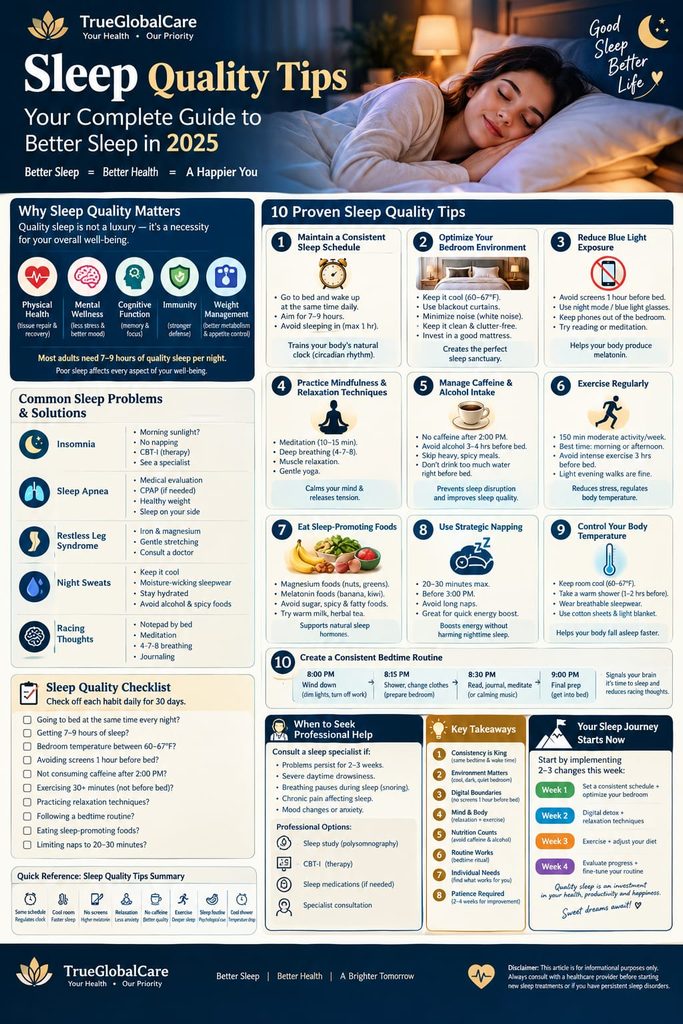
Why Sleep Quality Matters
Quality sleep is not a luxury—it is an essential body function required for:
Physical Health: Facilitates tissue repair, muscle recovery, and cellular renewal.
Mental Wellness: Helps regulate mood, process emotions, and lower stress levels.
Cognitive Function: Improves memory consolidation, focus, and decision-making.
Immunity: Strengthens your immune system to defend against common illnesses.
Metabolic Health: Supports appetite control and healthy blood sugar regulation.
Most adults require 7 to 9 hours of uninterrupted sleep each night. Chronic poor sleep affects every system in the body, leading to daytime fatigue, reduced focus, and increased long-term health risks.
10 Proven Tips for Higher Sleep Quality
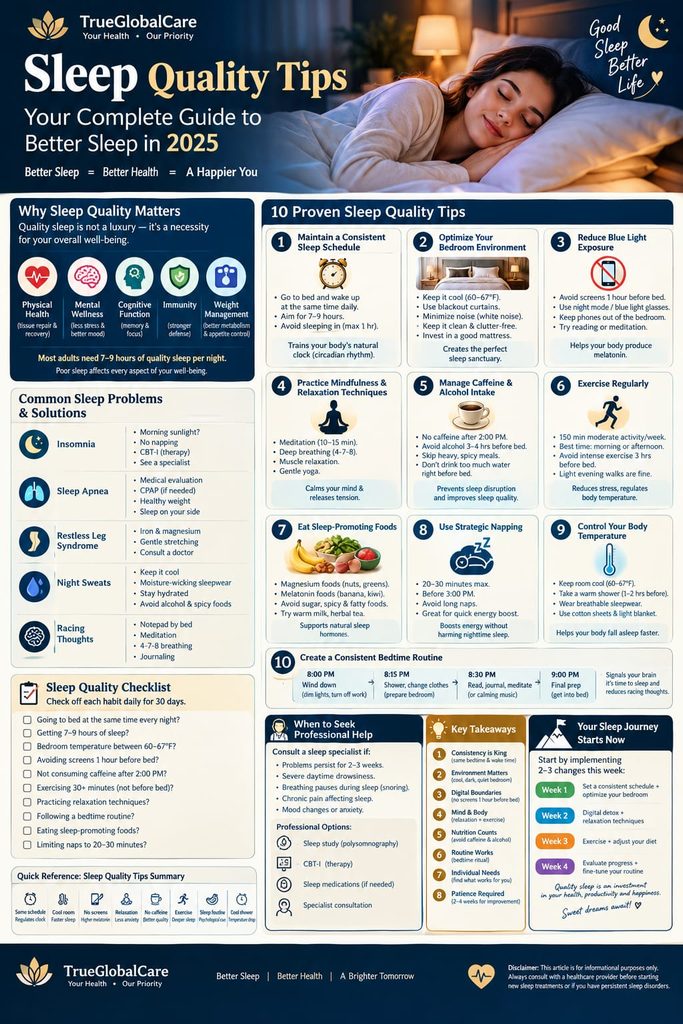
1. Maintain a Consistent Sleep Schedule
Your body relies on an internal biological clock known as the circadian rhythm. Consistency strengthens this clock and trains your brain to wind down naturally.
Go to bed and wake up at the same time daily, even on weekends.
Limit weekend sleeping-in to no more than 60 minutes to prevent “social jetlag.”
Aim for 7–9 hours of continuous rest.
2. Optimize Your Bedroom Environment
Your bedroom environment directly influences how quickly you fall asleep and stay asleep.
Temperature: Keep the room cool, ideally between 60°F and 67°F (15°C–19°C).
Lighting: Ensure complete darkness using blackout shades or a comfortable eye mask.
Sound: Eliminate unwanted noise using earplugs, a fan, or a white noise generator.
Bedding: Invest in a supportive mattress and breathable, high-quality pillows.
Purpose: Reserve your bed strictly for sleep and intimacy to maintain a strong mental link between bed and rest.
3. Implement an Evening Digital Detox
Blue light emitted by smartphones, tablets, computers, and TVs suppresses melatonin—the hormone responsible for sleep.
Turn off electronic screens at least 60 minutes before bed.
Use built-in “night mode” or blue-light blocking lenses if screen exposure is unavoidable.
Keep handheld devices away from the nightstand to remove temptation.
Replace screen time with offline winding-down habits, such as reading a book or journaling.
4. Practice Relaxation and Mindfulness Techniques
Mental chatter and elevated cortisol (stress hormone) are among the primary causes of nighttime wakefulness.
Meditation: Spend 10 to 15 minutes practicing guided meditation or focused breathing before bed.
Box Breathing: Inhale for 4 seconds, hold for 4 seconds, exhale for 4 seconds, and pause for 4 seconds. Repeat for a few cycles.
4-7-8 Technique: Inhale quietly through your nose for 4 seconds, hold your breath for 7 seconds, and exhale completely through your mouth for 8 seconds.
Progressive Muscle Relaxation (PMR): Alternately tense and relax muscle groups from your toes up to your face to discharge physical tension.
5. Manage Caffeine and Alcohol Consumption
What you eat and drink during the day directly affects nighttime sleep architecture.
Caffeine Cutoff: Stop consuming coffee, energy drinks, tea, or dark chocolate at least 6 hours before bed (typically by 2:00 PM for a standard schedule).
Limit Evening Alcohol: While alcohol acts as a sedative initially, it severely disrupts late-night REM sleep and often causes midnight awakenings.
Light Evening Snacks: Avoid heavy, greasy, or highly spicy meals within 2 to 3 hours of sleep to prevent indigestion or acid reflux.
6. Stay Active During the Day
Regular physical activity promotes deeper sleep stages and lowers stress.
Strive for at least 150 minutes of moderate exercise per week.
Complete high-intensity workouts during the morning or afternoon. Exercise raises core body temperature and heart rate, so avoid intense training within 3 hours of bedtime.
Stick to gentle stretching, light yoga, or a brief evening walk close to bedtime.
7. Choose Sleep-Supportive Foods
Nutrition plays an essential role in regulating sleep hormones and neurotransmitters.
Magnesium-Rich Foods: Leafy greens, pumpkin seeds, almonds, and dark chocolate support muscle relaxation.
Natural Tryptophan & Melatonin Sources: Bananas, oats, tart cherries, turkey, and dairy items help facilitate sleepiness.
Hydration Balance: Stay hydrated throughout the day, but taper fluid intake 1 to 2 hours before bed to minimize middle-of-the-night bathroom visits.
8. Use Strategic Naps
While daytime naps can boost alertness, mismanaged napping interferes with nighttime sleep drive.
Limit daytime naps to 20–30 minutes.
Nap during the early afternoon (before 3:00 PM).
Skip naps entirely if you frequently struggle with nighttime insomnia.
9. Leverage Your Core Body Temperature
Your core body temperature naturally drops as bedtime approaches, signaling to your brain that it is time to sleep.
Take a warm bath or shower 1 to 2 hours before bed. When you step out of the warm water, your body temperature drops rapidly, mimicking the body’s natural pre-sleep cooling process and accelerating sleep onset.
Wear lightweight, breathable sleepwear made from natural fibers like cotton or bamboo.
10. Establish a Dependable Evening Routine
A timer designed for relaxation, breathing exercises, and better sleep. You can set sessions for meditation, calm breathing, or sleep, with simple controls including start, pause, reset, and screen dimming options. Ideal for reducing stress and improving rest.
Open the breathing and meditation timer
A structured evening routine acts as a psychological cue that prepares your mind for rest.
Sample 60-Minute Wind-Down Schedule:
Hour -1:00: Turn off screens, dim ambient lights, and lower the thermostat.
Hour -0:45: Take a warm bath/shower and complete personal hygiene steps.
Hour -0:30: Read a print book, write down tomorrow’s to-do list (to empty your mind), or practice light stretching.
Hour -0:10: Practice 5 minutes of deep breathing in bed, turn off lights, and prepare to sleep.

Fitness Routine Generator
This tool creates personalized workout plans based on your fitness level and goals. Whether you’re a beginner or looking to improve an existing routine, it generates practical exercise plans that are simple to follow and easy to adjust.