
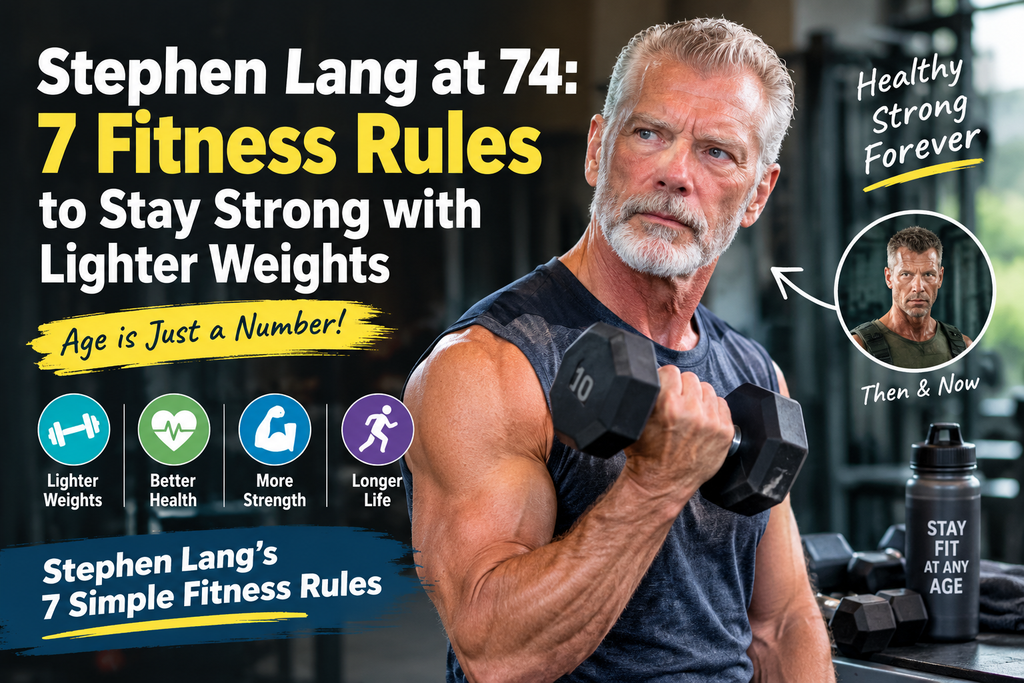
Stephen Lang at 74: 7 Fitness Rules to Stay Strong with Lighter Weights
Most people know Stephen Lang as Colonel Miles Quaritch, the hard-edged villain of the Avatar films. Fans have noticed something else: at 74, he looks lean, mobile and strong.
His training is not flashy. There is no luxury gym or secret supplement stack. According to a 2025 Men’s Health Australia profile, much of his work happens in a cramped basement room with a pair of dumbbells, some weight plates and a few homemade tools. What stands out is how consistent and varied his approach is.
This guide breaks down the Stephen Lang workout routine into seven practical rules. It also explains how to apply them safely if you’re over 60, returning to exercise, or just tired of the “go heavy or go home” mindset.
What Is the Stephen Lang Workout Routine?
Lang combines three disciplines: yoga, weight training and karate. Reports say he sometimes blends all three into a single session. He also falls back on bodyweight exercises, such as push-ups, when he has no equipment. He has said he committed to staying fit and flexible for life around 2010, when he became aware of getting older.
Notice what the routine is not. It isn’t a bodybuilding split or a max-lift program. It’s a mix of strength, flexibility and movement skill, built to last for decades.
Why Does This Approach Matter After 70?
Muscle mass and strength decline gradually with age, and that loss can affect balance, independence and fall risk. The good news is that regular strength training slows this process.
Health authorities agree on the basics. The WHO and the CDC both recommend that adults over 65 do muscle-strengthening activity on at least two days a week. They also recommend aerobic activity and balance-focused exercise. Lang’s blend of weights, yoga and martial arts covers much of that ground.
7 Fitness Rules from Stephen Lang’s Approach
Rule 1: Treat fitness as a lifelong commitment, not a phase
Lang has described 2010 as the point when he committed to staying fit for the rest of his life. He doesn’t frame it as fighting age. He frames it as adapting to it.
Try this: Stop chasing a 12-week transformation. Pick a routine you can still imagine doing in five years, and protect it like a standing appointment.
Rule 2: Mix your disciplines
Yoga builds flexibility and body awareness. Weights build strength and bone-supporting load. Martial arts add coordination, footwork and conditioning. Together they train different qualities, so no single weakness gets ignored.
Try this: Over a week, pair two strength sessions with one mobility or yoga session and one skill-based activity you enjoy, such as tai chi, dancing or a beginner martial arts class.
Rule 3: Keep your setup simple
Lang’s main workout space is small, with dumbbells, plates and a few homemade tools. You don’t need a membership to get stronger. A pair of adjustable dumbbells, a resistance band and a mat cover a surprising amount.
Try this: Build a home kit under a small budget and keep it visible. Equipment you can see gets used.
Rule 4: Use manageable loads, and make them count
This is the “lighter weights” rule, and it’s where the research is worth explaining. Studies comparing lighter and heavier loads suggest that muscle growth can be similar when sets are taken close to fatigue. Heavier loads tend to build more maximal strength. For older adults, the real advantage of moderate loads is that they are easier on joints and tendons and easier to perform with good form.
Lighter doesn’t mean easy. The last few reps of a set should feel challenging while your technique stays clean.
Try this: Choose a weight you can lift 10 to 15 times with control. Stop when you have about two reps left in reserve.
Rule 5: Know your bodyweight fallbacks
When Lang has no weights, he improvises with bodyweight moves. The profile mentions push-ups, and he reportedly sticks to 11 reps as a personal quirk. Bodyweight training removes the “I can’t work out today” excuse.
Try this: Keep a travel-proof circuit ready: sit-to-stands, wall or incline push-ups, step-ups and a plank hold. Adjust the difficulty to your level.
Rule 6: Protect flexibility and mobility
Lang has said he wants to stay as flexible as he is fit. Mobility work, such as yoga, helps you move through a full range of motion, which supports everyday tasks like reaching, bending and getting up from the floor.
Try this: Spend 10 minutes after workouts on gentle stretching or a beginner yoga flow. Skip any position that causes sharp pain.
Rule 7: Find a body weight and rhythm that feel comfortable
Lang reportedly weighs about 155 pounds and says his frame carries that weight more comfortably. That’s his number, not a target for anyone else. A healthy weight depends on height, build, health conditions and age.
Try this: Instead of chasing a number, notice how you feel on stairs, in your joints and in your energy levels. Discuss weight goals with your doctor.
A Sample Week Inspired by Lang’s Style
This is a general template for healthy adults, not Lang’s actual schedule.
| Day | Focus | Example |
|---|---|---|
| Monday | Full-body strength | Goblet squats, rows, incline push-ups (2–3 sets) |
| Tuesday | Mobility | 20–30 minutes of gentle yoga |
| Wednesday | Skill and cardio | Brisk walk or beginner martial arts class |
| Thursday | Full-body strength | Step-ups, shoulder press, farmer carries |
| Friday | Mobility and balance | Stretching, single-leg stands |
| Weekend | Active rest | Walking, gardening, light play |
Common Mistakes to Avoid
- Copying a celebrity’s routine exactly. Their fitness base, history and medical situation aren’t yours.
- Going too heavy too soon. Build gradually.
- Skipping warm-ups. Five minutes of easy movement reduces strain.
- Ignoring recovery. Muscles adapt between sessions, not during them.
- Training through sharp pain. Discomfort from effort is normal. Sharp or joint pain is a stop sign.
Who Should Be Careful?
Check with a healthcare professional before starting or changing an exercise program if you have heart disease, uncontrolled high blood pressure, osteoporosis, joint replacements, balance problems, or if you’ve been inactive for a long time. A physiotherapist can also design a safe starting plan.
When to See a Doctor
Stop exercising and seek medical advice if you experience chest pain, severe shortness of breath, dizziness or fainting, unusual swelling, or pain that doesn’t ease with rest.
Frequently Asked Questions
See the FAQ section below.
Conclusion
Stephen Lang’s routine works because it’s sustainable: a small space, simple gear, a mix of yoga, weights and martial arts, and a decades-long commitment. You don’t need his schedule or his film-star budget. Start with two strength sessions a week, add some mobility work, and keep the loads manageable. At any age, consistency matters more than intensity.
Medical disclaimer: This article is for general information only and isn’t medical advice. Consult a qualified healthcare professional before starting a new exercise program, especially if you have a medical condition.
7. FAQ (Schema-Ready)
Q1: What is the Stephen Lang workout routine?
Stephen Lang combines yoga, weight training and karate, according to a 2025 Men’s Health Australia profile. He also does bodyweight exercises when he has no equipment.
Q2: How old is Stephen Lang, and how does he stay fit?
Stephen Lang was born on July 11, 1952, so he is 74. He stays fit through consistent training that blends strength work, flexibility and martial arts.
Q3: Does Stephen Lang only use lighter weights?
Reports describe dumbbells and 10 lb plates in a small home gym, but they don’t state a “lighter weights only” rule. Research does show that moderate loads, trained close to fatigue, can build muscle effectively and are gentler on joints.
Q4: Is strength training safe for seniors?
For most people it is, when started gradually with good form. Health agencies recommend muscle-strengthening activity at least two days a week for older adults. People with medical conditions should check with a doctor first.
Q5: How often should adults over 70 strength train?
Aim for at least two non-consecutive days a week, plus aerobic and balance activity as your doctor advises.
Q6: Can lighter weights really build muscle?
Yes. Studies suggest that lighter and heavier loads can produce similar muscle growth when sets are taken close to fatigue. Heavier loads generally favor maximal strength.
Q7: What exercises can I do without equipment?
Sit-to-stands, wall or incline push-ups, step-ups, planks and standing balance holds are good starting points.